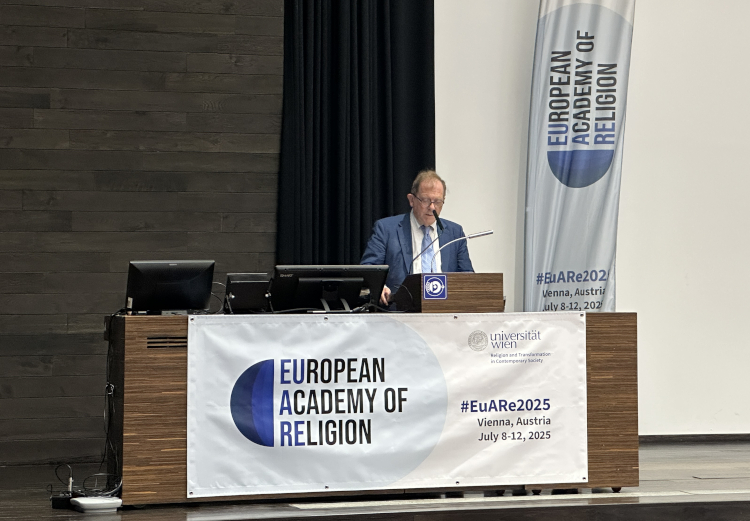
University of Vienna, July 10, 2025
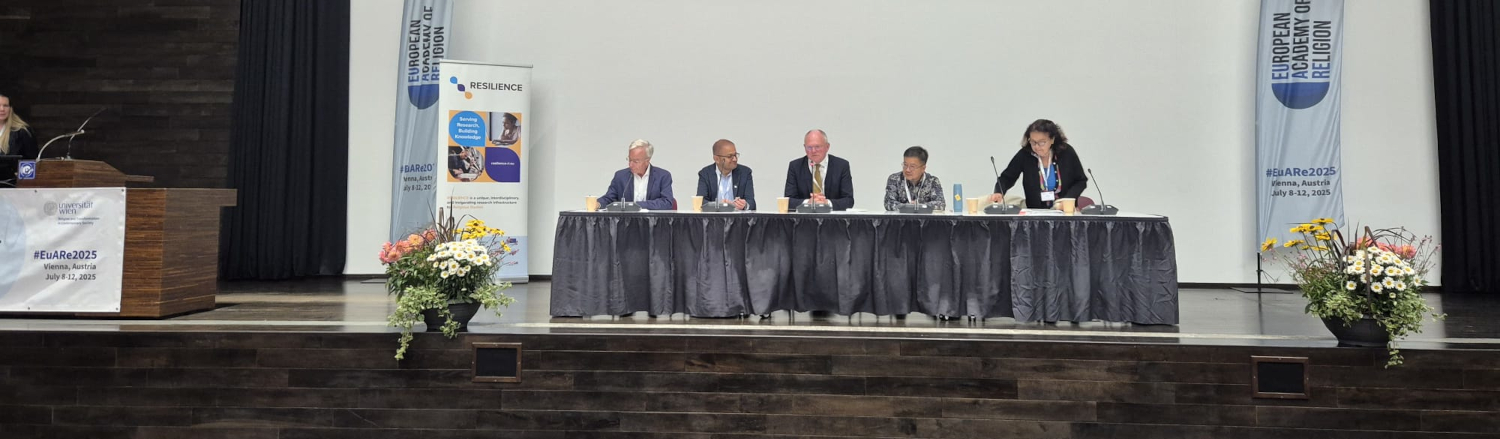
A panel discussion held during the Eighth Annual Conference of the European Academy of Religion offered a rich and animated reflection on the eschatological theology of the late Metropolitan of Pergamon John Zizioulas. Entitled “Remembering the Future: John Zizioulas’ Eschatological Vision,” the session drew significant attention for its depth, theological insight, and vibrant dialogue among participants. The panel was organized by the Volos Academy for Theological Studies in cooperation with St. Sebastian Press from Los Angeles, CA.
The event focused on Zizioulas’ final and posthumously published work, Remembering the Future: Towards an Eschatological Ontology (2023). In this seminal book, Zizioulas argues that eschatology is not merely a future doctrine, but an existential orientation—an active lens through which the Church understands history, ethics, community, and its very being.
The panel was chaired by Dr. Nikolaos Asproulis, deputy director of the Volos Academy for Theological Studies and the Hellenic Open University in Patras, Greece. Dr. Asproulis is also the editor of the newly launched OmegAlpha: Journal for the Study of Metropolitan John Zizioulas’ Theology, a platform dedicated to critical engagement with the late Metropolitan’s thought. He convened the session with theological clarity and pastoral sensibility, opening the floor for an invigorating exchange.
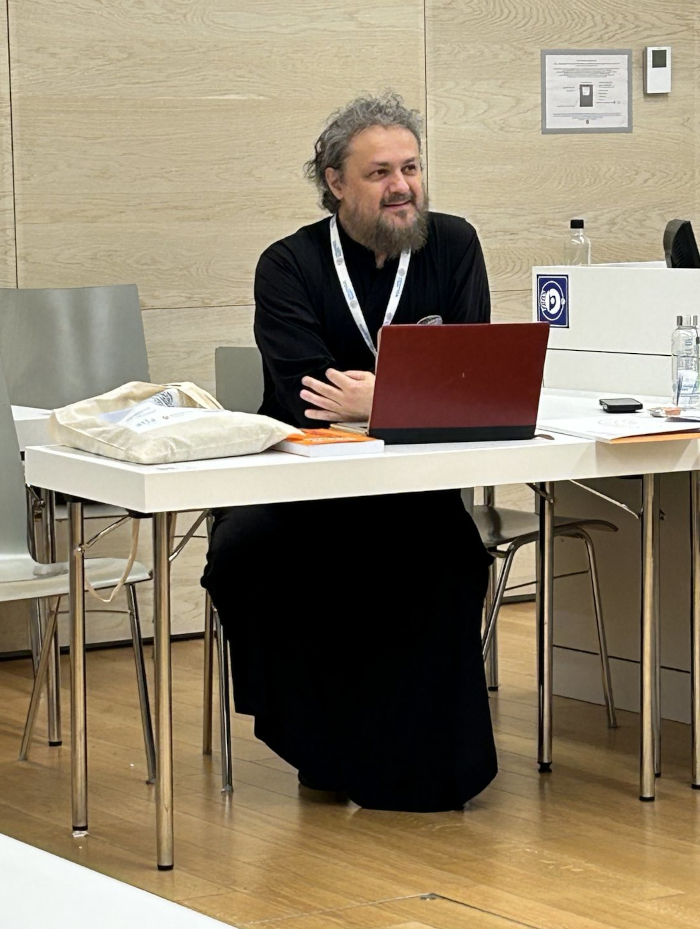
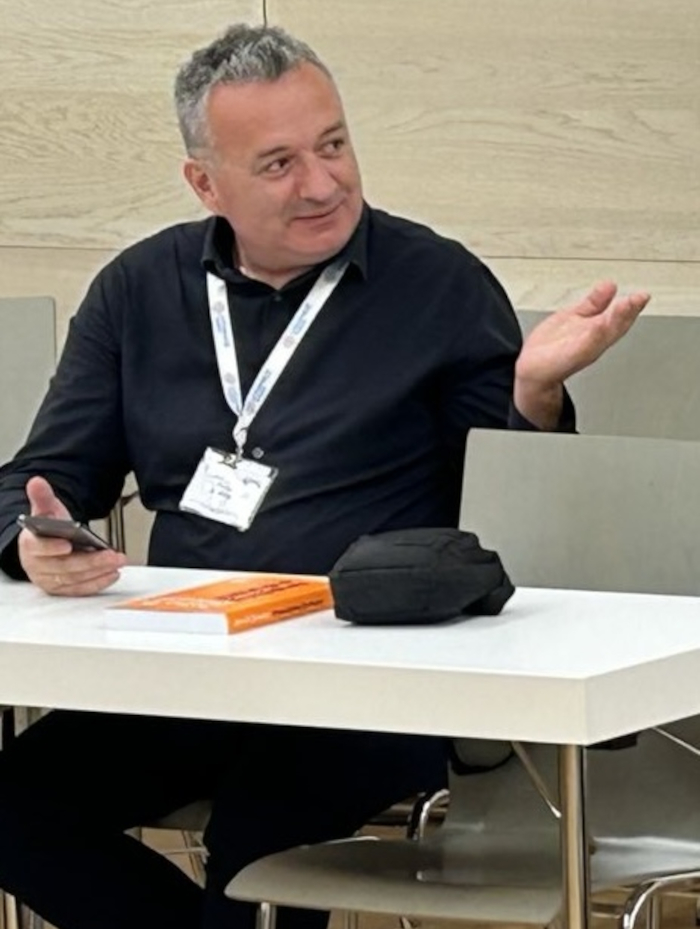
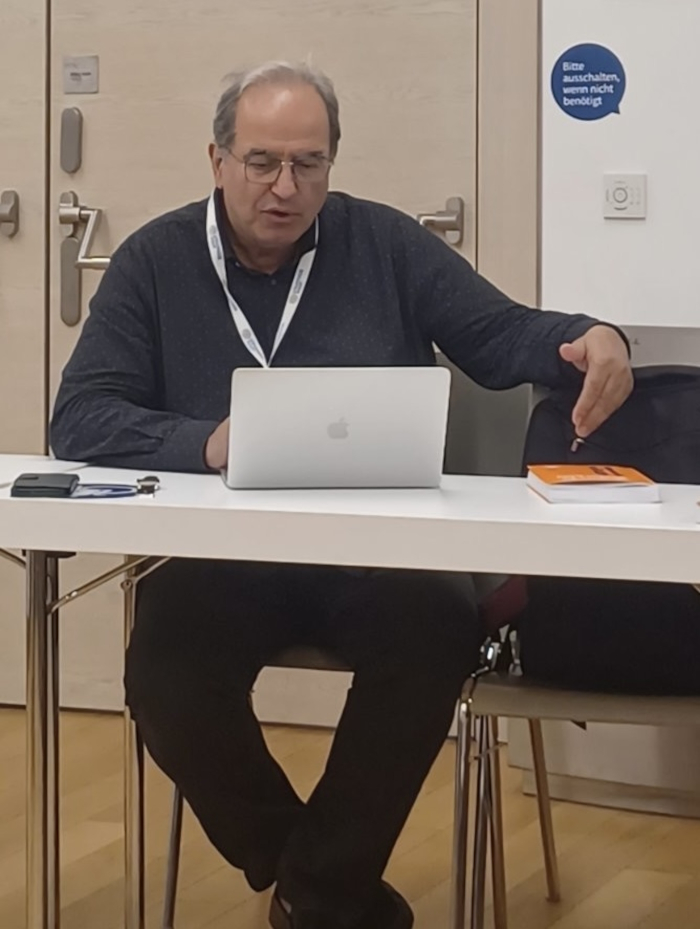
The featured speakers included Bishop Maxim (Vasiljević) of the Diocese of Los Angeles and Adjunct Professor of Dogmatics and Patristics at Holy Cross Greek Orthodox School of Theology in Boston, MA, Dr. Pantelis Kalaitzidis, Director of the Volos Academy for Theological Studies, and Prof. Dr. Najib George Awad, Associate Researcher at Bonn University, Germany.
Bishop Maxim offered a theological meditation titled “Eschatological Horizons: Time, Remembrance, and the Ethics of the Future,” in which he explored how Metropolitan John redefines ethics through an eschatological ontology, grounding moral action in the future Kingdom inaugurated by Christ’s resurrection. Unlike traditional ethics based on nature or reason, his approach offers a dynamic, forward-looking framework.
Dr. Kalaitzidis focused on the future-oriented reading of tradition in Zizioulas’ theology, highlighting how this hermeneutical approach could be applied to contemporary issues such as the interpretation of tradition and the ordination of women. Prof. Awad, in turn, explored resonances between Zizioulas and other Trinitarian thinkers, particularly Colin Gunton, emphasizing their shared commitment to dialogue, relationality, and particularity. He sought to uncover possible hidden connections between the two theologians, especially in their theological method and vision.
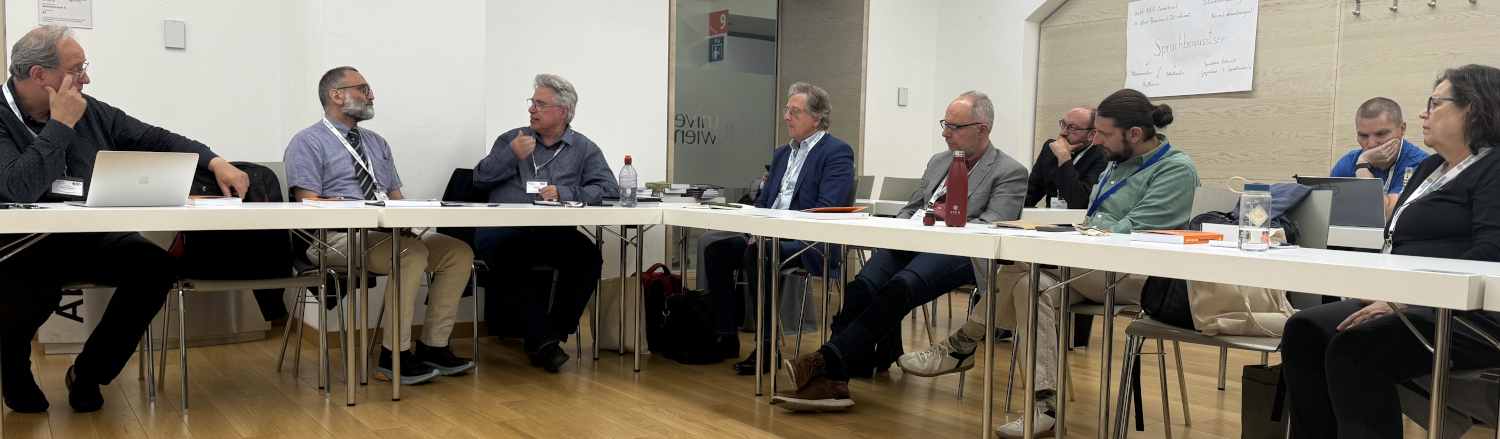
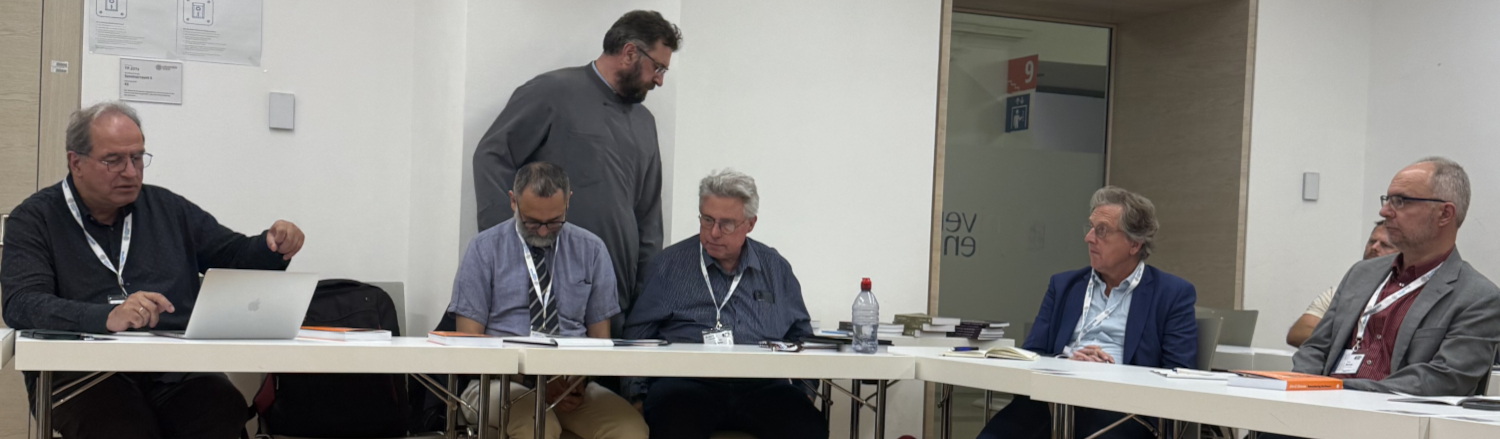
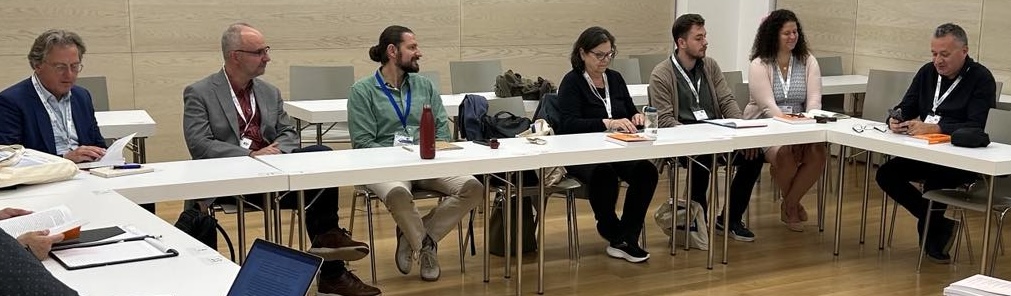
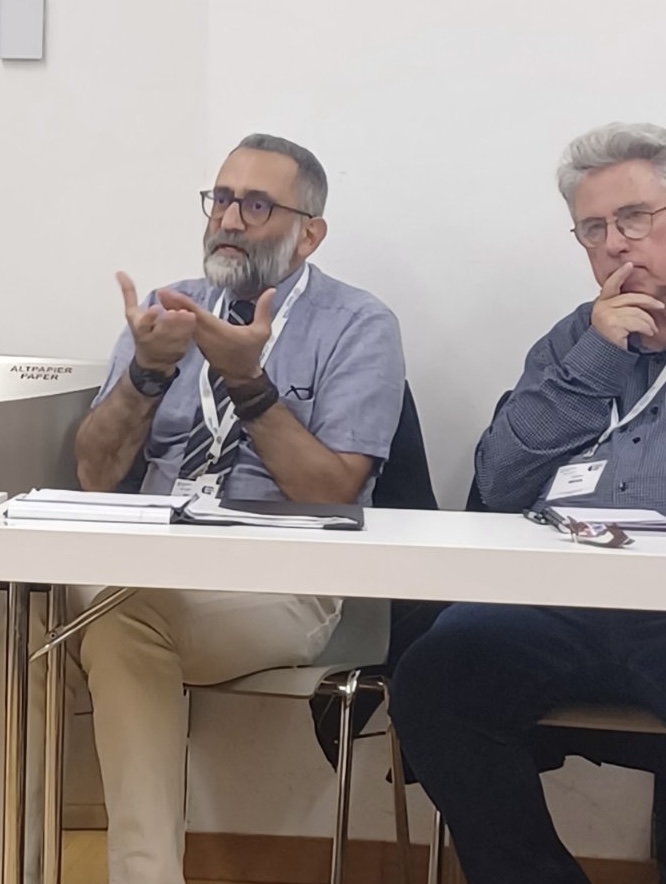
The discussion was marked by a spirit of genuine theological inquiry. Many questions were raised from the audience—ranging from the practical implications of eschatology in modern life to the relevance of liturgical experience as a foretaste of the Kingdom. The panelists engaged openly, offering thoughtful and inspiring responses.
This session reaffirmed Zizioulas’ enduring impact on contemporary Orthodox theology. His vision continues to challenge us to interpret our lives and our faith not as fragments of the past but as participants in a future already inaugurated by Christ’s Resurrection.
Photographs — European Academy of Religion, Vienna